Long-Form Reportage

Narratively
Most people in the West would struggle to pinpoint the Central African Republic on a map. Its international claim to fame is the dire poverty of its citizens and its terrifying, bloody, seemingly never-ending wars.
In its capital, Bangui, one of the ways of finding normalcy amid the chaotic years of cries and gunshots has been through the country’s rich music tradition. Whether the rhythmic drumming of the tam–tam, the strumming of the guitar, or the bubbling sounds of the balafon, a xylophone of wood and animal skins — music is a constant here. And Charlie Perrière is one of its undisputed kings. And once, his fame saved his life - here is his story, and the story of his incredible orchestra, which played for one of the world's most infamous dictators.
How One Family Preserved Tbilisi's Hidden Mansion for 125 Years
Town & Country magazine
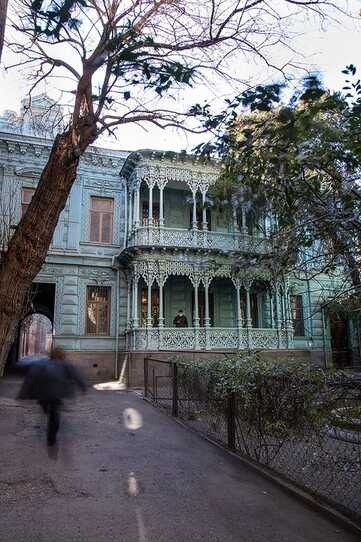
Every day, thousands of pedestrians stroll along a busy section of Rustaveli Avenue in Tbilisi, Georgia, without the faintest idea that just around a corner, on a side street past a crumbling cable car station, stands a mansion that looks as if it has been lifted straight from the pages of a fairy tale. It has intricately carved balconies painted a light turquoise that looks as if it might melt into the sky above. Inside the Blue House, as it is called, the walls are covered with artworks by members of an extraordinary family that has managed—through Soviet occupation, civil war, and a Russian invasion in 2008—to hold on to its precious home.
(Photographs by Daro Sulakauri)
The Hunt For the Romanovs’ Greatest Lost Treasure
Published by Town & Country magazine
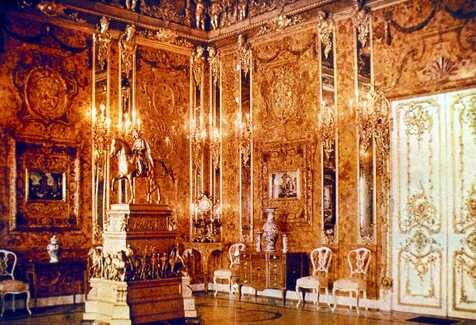
Yantarnaya Komnata (in English, the Amber Room) was a royal chamber in the Catherine Palace, just outside St. Petersburg, which had walls lined with panels of amber backed with gold leaf and inlaid with semiprecious stones. Generations of Russian rulers lavished attention on the room—it was said to bathe occupants in an ethereal light—and over a period of two centuries they added new elements and moved it to successively larger spaces. But in 1941 the Nazis marched on Leningrad and soon the contents of the room—including all 600 square feet and 13,000 pounds of amber—disappeared. Hopes for recovering Tsarist Russia's Amber Room heated up last summer only to be dashed once again. But the real mystery might be why we can’t stop looking for it.